
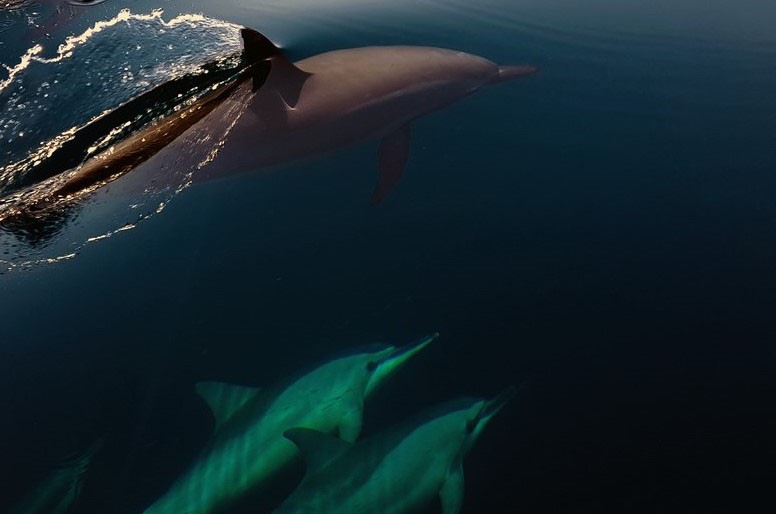
Marine biologist Mohsen Rezaie-Atagholipour has been fascinated by the ocean and its inhabitants ever since childhood. Before studying marine biology at university, he already devoured book after book on the subject. His passion for the Persian Gulf started soon after he moved to a coastal town at the sea to study marine biology.
When Mohsen finished his studies, he started working for the Environmental Agency of Qeshm Island, which is the largest island in the Persian Gulf.
After 15 years of working with marine wildlife in the Persian Gulf as a student, teacher, govenrmental employee, and freelance consultant, in 2018 he decided to found QECI (Qeshm Environmental Conservation Institute), a marine conservancy based on Qeshm Island in Iran.
In the media, the Persian Gulf is often portrayed as a conflict area, famous for its huge oil and gas resources. However, in this interview, Mohsen takes us beyond these conflicts and tells us more about the real face of the Persian Gulf.
The work that you do focuses on the Persian Gulf. Can you tell us something about this region?
The Persian Gulf is a very young sea and it’s also the warmest one on the planet – the water here gets 36 °C to 38 °C during summer, which is very hot. But it’s also a unique place when it comes to salinity, dissolved oxygen, and acidification. Most parts of the Persian Gulf have a salinity level of 40%, which is 5% higher than the average. A huge seasonal hypoxic area with an area of 50,000 km2 has been recently discovered on the Iranian side of the Persian Gulf starting from the late summer to mid-autumn. Levels of dissolved oxygen in these hypoxic waters are below 2 ml/L.
But scientists were shocked by the pH values recorded in these hypoxic, which were as low as what is predicted for ocean acidification in 2100. Nonetheless, the sea is alive, not as biodiverse as other tropical waters of the Indian Ocean, but the biotope has adapted to living in such an extreme environment. Therefore, like a magic crystal ball, the Persian Gulf can show us the destination of marine biodiversity under the global warming scenario.
Do you want to know how marine communities will respond if global warming keeps continuing, come here and see how they have already responded to the climate-changed realm of the Persian Gulf. The sea, therefore, is like a living laboratory to study the effects of global warming on marine wildlife, and I think it is the most spectacular fact about the Persian Gulf.
In 2018, you founded QECI, what does this institute do?
QECI stands for Qeshm Environmental Conservation Institute, and our mission is to protect marine wildlife in the Persian Gulf. We do a lot of research, develop science-based solutions and raise public awareness around the Persian Gulf. While doing this, we also work closely with universities, local communities, and the government.
Sharks and rays are on top of QECI’s priorities. What’s the biggest threat to these animals?
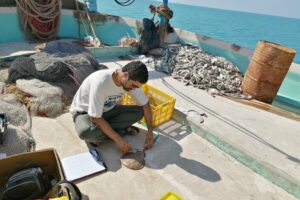
The biggest threats are the shark fin trade and the trade of rays. A huge number of these animals get caught and exported to other countries. This is a big problem because of their reproductive strategies. These animals only produce low numbers of offspring, so they’re very vulnerable to overexploitation. The northwestern Indian Ocean, including the Persian Gulf, is home to more than 150 species of sharks, rays, and chimaeras, which comprises more than 15% of all known chondrichthyan species. However, half of these species in the region are classified as threatened on the IUCN Red List of Threatened Species. On top of that, sharks, rays, and other fish get stuck in fishing nets too.
On the QECI website, you wrote: “The natural environment of this young sea is now pushed into its last stronghold.’’ Do you think that there’s still enough time to save the Persian Gulf?
We still have enough time, but the problem is that it seems like we don’t have the will. The Persian Gulf is famous for its oil and gas resources, but there’s no will to protect this habitat. There are also a lot of conflicts between the countries surrounding the gulf. Marine wildlife, however, doesn’t care about man-made boundaries, and sharks, for example, often migrate between the Iranian and Arabian waters. So in order to protect the species in this habitat, the countries around the Persian Gulf need to work together.
Unfortunately, I don’t see a lot of willingness here. So although we do have enough time, time is not enough to protect marine wildlife. We have to be willing to work together, too, and the first step is to make people aware of this.
What efforts do you make to protect the biodiversity in the Persian Gulf?
We believe in research – if you want to protect wildlife, you must know how to protect it first. We don’t know a lot about the marine wildlife living in the Persian Gulf, so we do a lot of research on that. The second step is to develop science-based solutions and present them to the government and local communities so that they can be launched. One of the things we are going to do is to modify fishing nets to make them more sustainable. Apart from this, we also try to raise public awareness and educate the younger generations on the subject.
How do you educate the local communities about the status of the Persian Gulf?
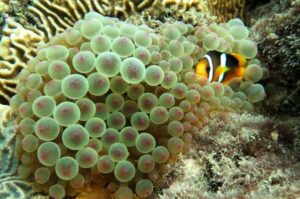
This may be surprising, but a big part of the local communities doesn’t need to be educated about the environment. Last year, we talked to more than 700 fishermen about marine wildlife and most of them have a lot of ecological knowledge and are aware of many scientific facts. For example, when I asked them if they knew why we need to protect sharks, an 80-year-old fisherman responded that sharks are predators and eat smaller fish, these smaller fish also eat other fish and that’s how everything is connected.
The older generations have a lot of knowledge, but the problem is that the younger generations have been disconnecting from nature. They have a different way of living which involves smartphones with GPS systems, boats with an engine, and nylon fishing nets. You don’t need much knowledge or experience to use these items, so there are a lot of inexperienced fishers that take advantage of the marine resources without knowing enough about the environment. That’s why the younger generations are the ones that should be educated, and what we teach them is what we’ve learned from their grandfathers.
Apart from that, we also want to educate people who live further away from the sea. They should be aware that every shrimp they buy at the supermarket has an impact on marine wildlife.
What should we, as eco-tourists, be aware of if we want to visit the Persian Gulf?
I do encourage people to come and see the beautiful marine wildlife in the Persian Gulf, but this should be done sustainably. We should focus on ecotourism instead of mass tourism or luxury tourism. The Persian Gulf is a fascinating area for nature lovers from all over the world, but people should behave very gently when they come here. For example, paddleboarding and kayaking in the calm environment of the mangrove forests are silent activities that you can do that don’t hurt the environment but give you the chance to enjoy watching the birds and aquatics of these very productive and biodiverse marine ecosystems.. Another example would be responsible scuba diving to visit the life below the waves.
I love that famous hiking quote that says “Take only photos, leave only footprints”. It’s exactly the same for the ocean, every activity we do in the ocean should have a minimum impact on the environment.
What is your number one tip to travel more sustainably?
Reduce disposable plastics, this is very dangerous for the ocean. I think plastic is actually the main threat to the ocean, so traveling with a minimum amount of plastic is my top tip.
Check out QECI’s website if you want to learn more about Mohsen, the Persian Gulf, and its beautiful wildlife.


0 Comments