
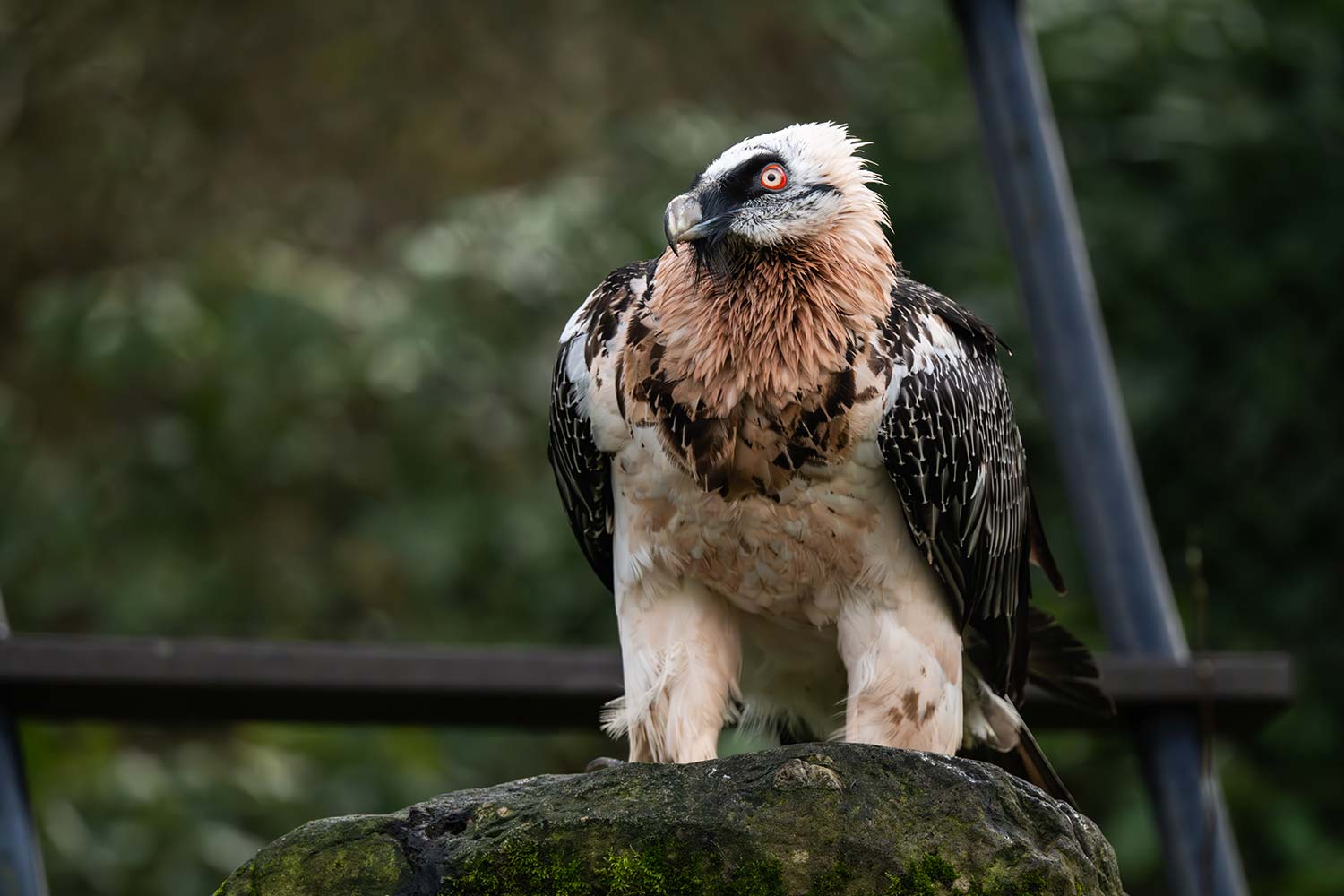
First of all, we get to read about that special day, when our journalist was able to visit the Horstmann Trust. Adam, Holly, and Neil are a special trio with an even more unique job. Their lives are intertwined with the lives of 70 endangered vultures, and there are probably not many people who are so dedicated to their lives’ mission. This story is personal and incredibly layered, and therefore an incredible read.
Unlike the massive size of vultures, Asman Adi Purwanto cares about a much smaller species: the Javan Blue Flycatcher. Usually found in the bird-song-rich forests of Indonesia, reality nowadays is less bright. Keeping songbirds at home is culturally ingrained for the local people, but it has left the forest silent. Within his organization BISA, Asman is trying to turn the tide.
Have you ever seen a sea slug in real life? These precious animals come in all shapes and sizes, and their variety is just incredible. In this issue’s infographic, we dive into them. How did they evolve into such striking species? How do they live, and where can you find them? And what are their defense mechanisms? Good news: this infographic spreads over four pages!
Just as sea slugs might be relatively unknown to you, it might surprise you how wonderful bats are. Unfortunately, not everyone sees this the same way. Josephine Linet works at Angaza Vijiji, and cares as much about the bats as about the villagers. But how can she bring both together?
Instead of dealing with villagers, Lexi Smith visits rooms like the World Bank to talk about measuring biodiversity. A place not many of us will find ourselves. As a female founder with a tech start-up in a sector full of NGOs and fierce financial competition, she shares her story of how to lead with care.
Making an impact can take many shapes. Aimée Portioli found her way through music, and as a composer and musician, she is the face behind Symphony for Endangered Birds. More than just a song or symphony, it’s, as she states so wonderfully, “a 7-channel sonic examination of vulnerable bird species”. Although impossible to mimic the experience in words, the article will answer all your questions surrounding this impressive installation.
We have more stories covering the arts. Ellen Cochrane has enlightened us with the story behind her book “Follow the Water”. Inspired by the story of Juliane Koepcke, Ellen writes about the characteristics and skills you need to survive in nature.
Do you buy and wear your clothes consciously? And do the items you wear convey a message, or help you to convey one? For Rob Wreglesworth, one plus one equaled two when his brother told him about a company launching t-shirts where people would stand in line days before the release. If that is a possibility, why not use those t-shirts to convey an important message about species on the brink of extinction? With their first launch just finished, it’s time to ask Rob everything about his brand, No Longer Known.
Bats, snakes, spiders and frogs, they are probably in the same category for many people; unknown and unloved. Dr. Harikrishnan S. talks to us about the beauty of amphibians, especially frogs. What is there to love, and why do they need protection? Accompanied by stunning images, it’s hard not to change your perspective after reading this story.
Beyond all these stories, this magazine also contains our usuals, such as the New to Nature featuring the Marmosa chachapoya, various regional orca species as part of our Endangered Species, captivating images from Artem Siniyatulin as our newest Stargazer, and lastly, Patrizia Baldi’s take on the book ‘Living with Lynx’, written by Jonny Hanson.
Issue 17 is an issue filled to the brim with stories that trigger your senses. So stop scrolling and grab your copy now!


